

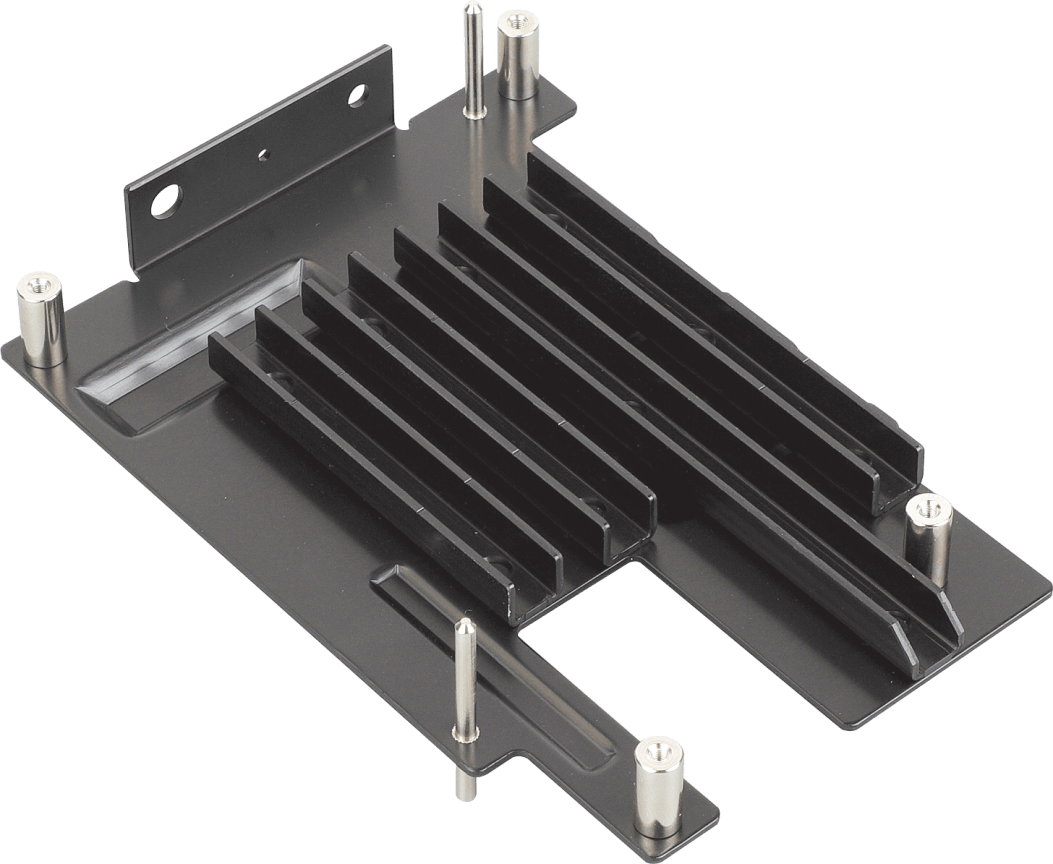
First, heat travels from the electronic component into the base of the heatsink. This transfer usually happens through direct contact, often with thermal paste or a thermal pad to reduce thermal resistance.
Next, the heat spreads through the metal body of the heatsink. The fins then increase the surface area, allowing more heat to escape into the air. In passive cooling systems, this happens through natural airflow. In active cooling systems, a fan helps move air faster and improves cooling efficiency.
Material also matters. Aluminum heatsinks are common because they offer a practical balance of cost, weight, and thermal performance. Copper heatsinks are sometimes used when higher thermal conductivity is required.
A well-designed heatsink helps improve product performance, reduce heat-related failure, and extend the life of electronic equipment.