

A compact headphone jack switch works by combining an audio connection interface with an internal switching mechanism. When a headphone plug is inserted, the connector not only transmits audio signals but also changes the internal contact state to support switching or detection functions.
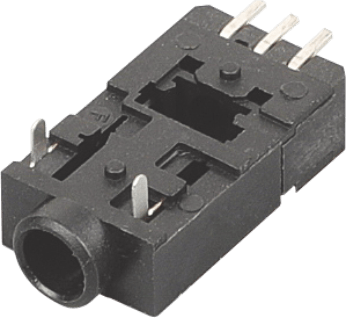
The process starts when the headphone plug enters the jack. Inside the connector, metal terminals touch the conductive sections of the plug and create the electrical connection. These contacts typically carry left channel, right channel, and ground signals, depending on the product design.
At the same time, the internal switch changes position. In many devices, when no plug is inserted, the circuit is connected to another output such as an internal speaker. Once the plug is inserted, the jack changes the contact state, disconnects the original path, and redirects the signal to the headphones. This allows the device to respond automatically without extra manual controls.
In some applications, the switch is also used for plug detection. When the headphone plug is inserted, the switch sends a signal to the control circuit or mainboard. The system can then recognize that headphones are connected and adjust its operating mode. For example, it may mute the speaker, activate headphone output, or trigger a related function.
Because the connector is compact, the internal structure must be precisely designed. The contacts need stable elasticity, accurate positioning, and reliable pressure to ensure consistent performance. Good material quality is also important, especially for repeated insertion, wear resistance, and stable conductivity over time.
This type of connector is useful because it combines multiple functions in one small part. Instead of adding separate switching or detection components to the board, engineers can use a compact headphone jack switch to simplify the circuit layout and save space.
Overall, a compact headphone jack switch works through both mechanical movement and electrical contact. It accepts the headphone plug, creates the audio connection, changes the internal switch state, and helps the system respond automatically. That combination makes it a practical and efficient solution for many modern electronic products.