

RF connectors come in many types, and each one is designed for specific frequency ranges, installation methods, and operating environments. While all RF connectors are used to transmit high-frequency signals, their size, structure, locking method, and performance can vary significantly.
SMA connectors are among the most common types. They are compact, threaded, and known for good high-frequency performance. SMA connectors are widely used in antennas, wireless devices, GPS modules, RF test equipment, and industrial electronics. Their small size and secure connection make them suitable for applications where space and stability both matter.
BNC connectors are also widely used. They feature a bayonet locking design, which allows quick connection and disconnection. BNC connectors are often found in test instruments, video equipment, and some communication systems. They are popular in laboratory and service environments because they are easy to handle.
N type connectors are larger and more durable. They are commonly used in outdoor antennas, base stations, radio systems, and industrial communication equipment. Their strong structure and good environmental resistance make them ideal for demanding applications.
TNC connectors are similar to BNC connectors but use a threaded coupling. This gives them better vibration resistance and a more secure fit. They are often used in transportation, aerospace, military, and mobile communication systems.
For compact devices, miniature RF connectors are often required. MMCX connectors are small and lightweight, making them suitable for communication boards, compact antennas, and portable devices. U.FL connectors are even smaller and are widely used inside Wi-Fi modules, Bluetooth modules, IoT products, and embedded electronic systems.
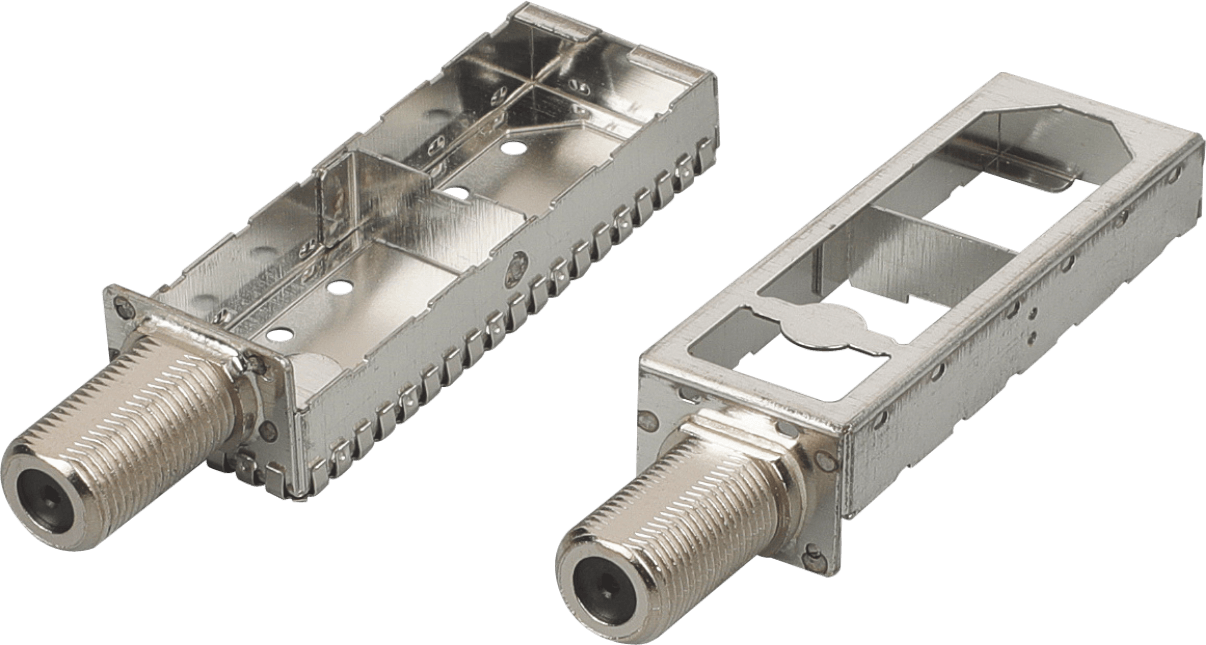
Other connector types are also important in specific applications. F type connectors are common in cable television systems, while FAKRA connectors are widely used in automotive electronics, including GPS, cameras, and infotainment systems.
When selecting an RF connector type, users should consider frequency, impedance, cable compatibility, mounting style, available space, and environmental conditions. The right connector type helps improve signal quality, simplify assembly, and increase system reliability.
In short, common RF connector types such as SMA, BNC, N, TNC, MMCX, and U.FL each have their own advantages. Understanding their differences helps engineers and buyers choose the best solution for communication, industrial, automotive, and electronic applications.